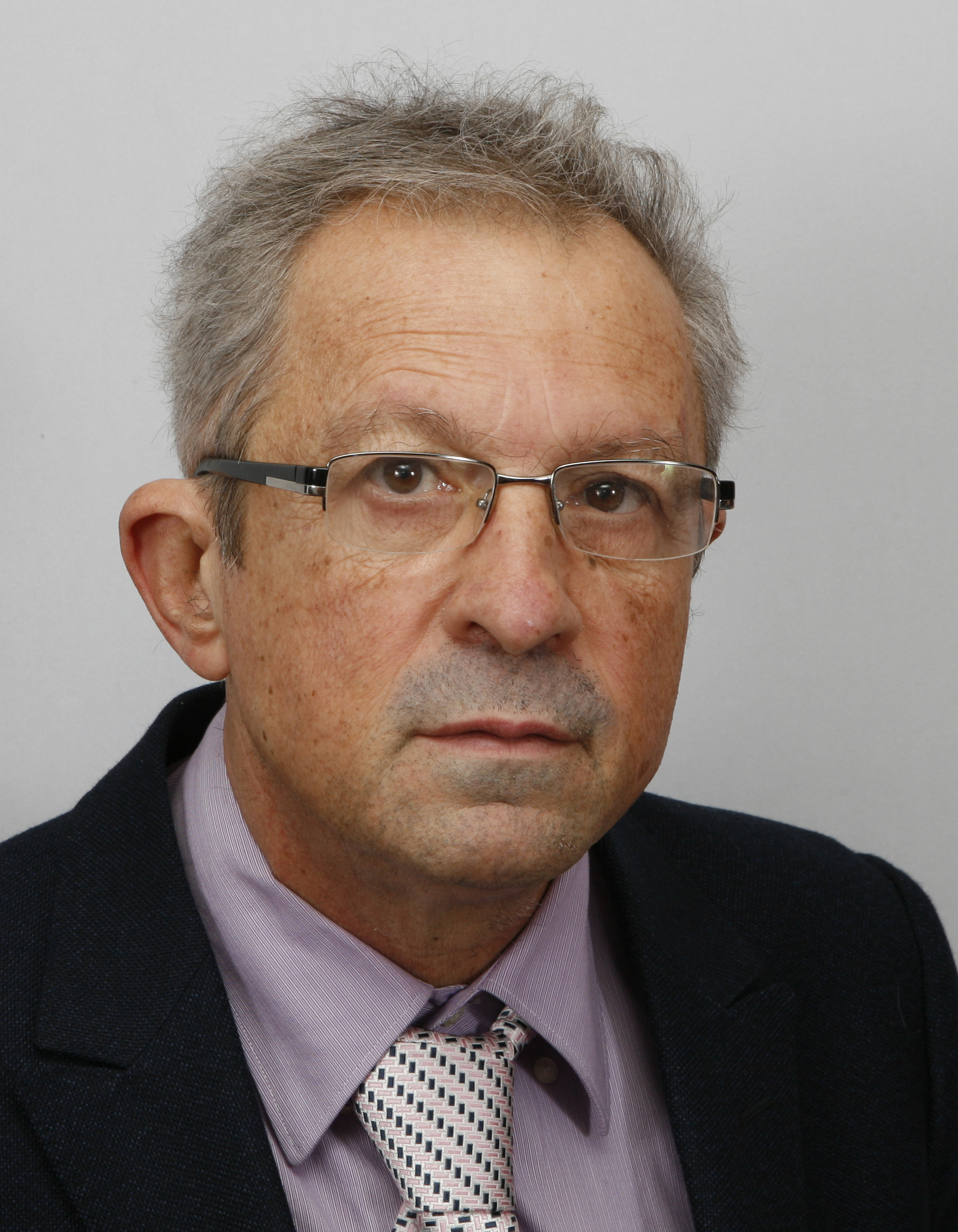
Joseph Sifakis
Turing Award Laureate
Verimag Laboratory
Hong Kong · 5 December 2026
Turing Award Laureate
Verimag Laboratory
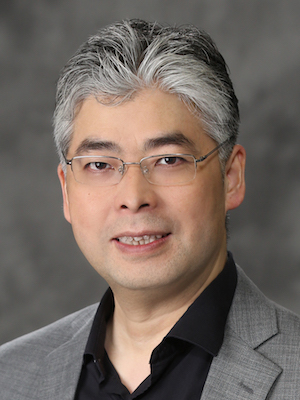
Professor
Yale University

ACM Fellow & Professor
University of Toronto
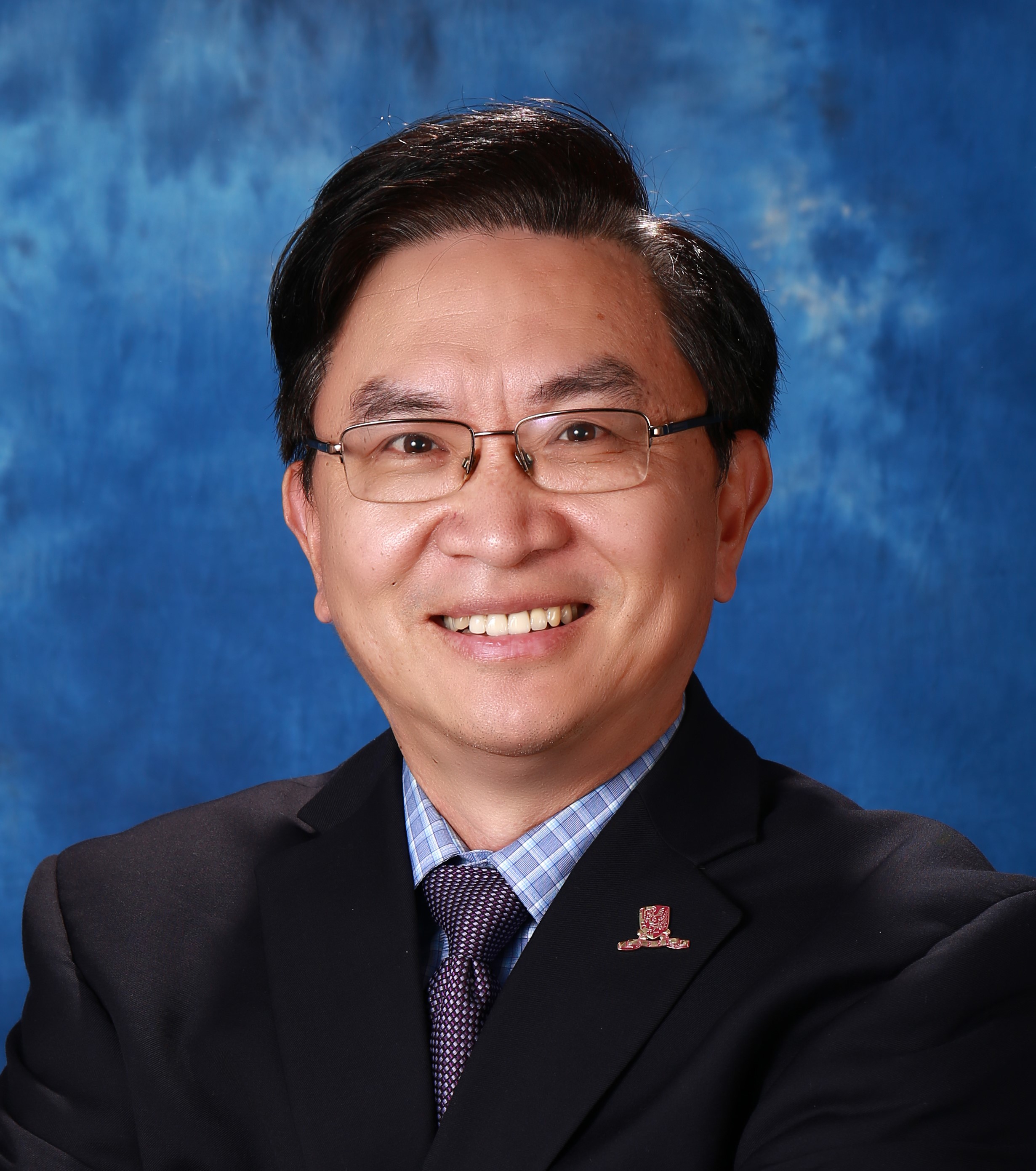
ACM & IEEE Fellow
Professor @ CUHK
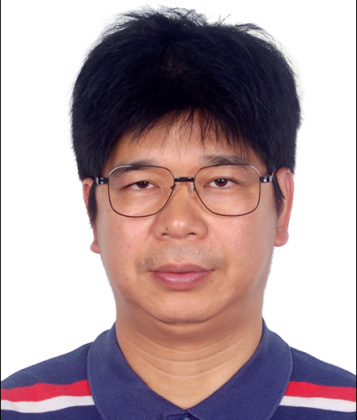
Boya Distinguished Professor
Peking University
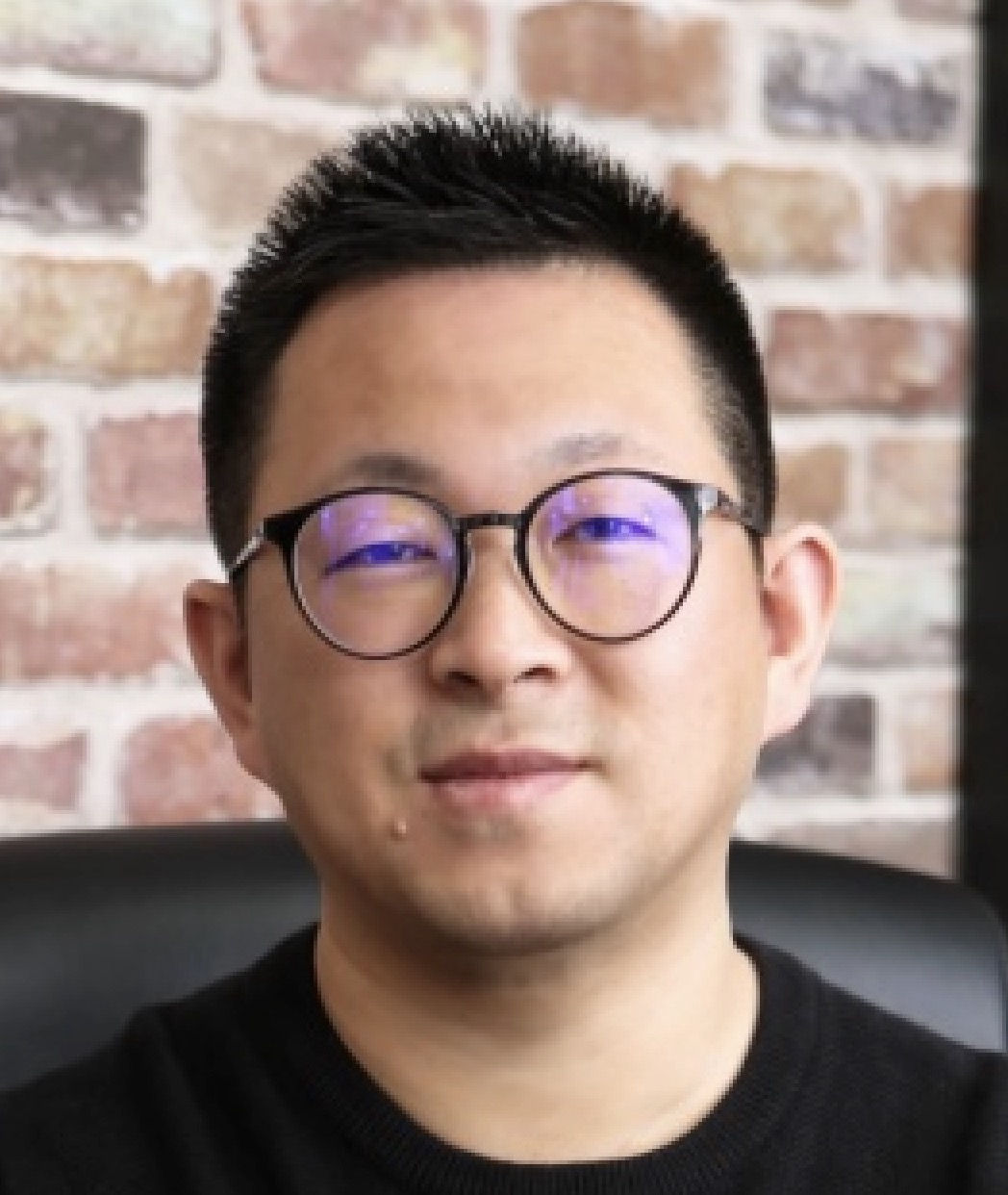
Professor
University of Tokyo/Alberta
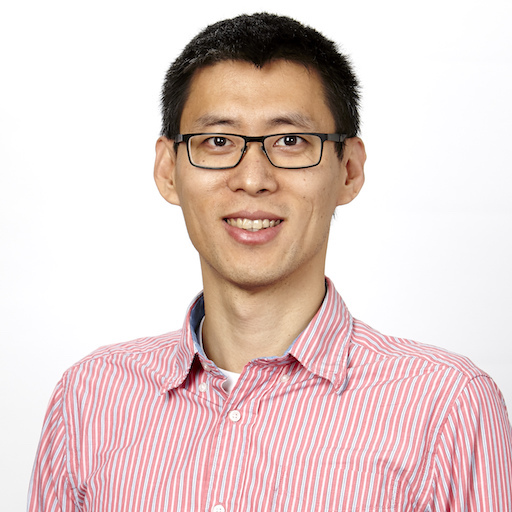
Chief AI Scientist
Oracle Health & AI
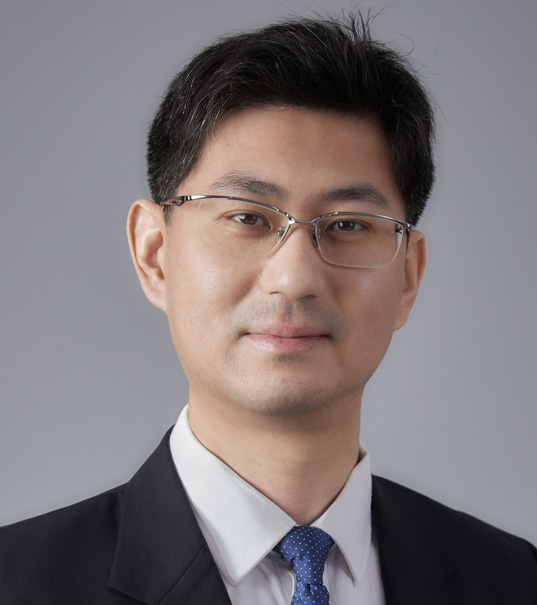
Associate Professor
SJTU
Welcome to Trusted AI Summit 2026
Artificial Intelligence is advancing at an extraordinary pace and is rapidly transforming science, industry, business, and society. Yet as AI systems become increasingly capable, autonomous, and embedded in critical infrastructure, one fundamental question is becoming impossible to ignore: Can we trust increasingly powerful AI systems?
The Trusted AI Summit 2026, to be held in Hong Kong on 5 December 2026, will bring together leading international researchers, technology pioneers, industry leaders, entrepreneurs, policymakers, and investors to explore the scientific, technological, and societal foundations required to build AI that is safe, reliable, transparent, secure, robust, explainable, and aligned with human values.
The Summit will address both the immediate challenges emerging from today's AI systems and the deeper questions raised by future frontier and superintelligent systems.
| Registration option | Fee (USD) | Register |
|---|---|---|
| Trusted AI Summit 2026 | US$300 | Register now |
| Trusted AI 2026 Week Pass | US$1,190 | Register now |
The Trusted AI Summit 2026 registration includes morning tea, networking lunch, and afternoon tea on the 5th of December.
The Trusted AI 2026 Week Pass includes registration for both the Trusted AI Summit 2026 and the PRDC 2026 conference.
Programme & speakers
Program overview: Invited talks about 40 minutes each, followed by a high-level panel discussion. Morning tea, networking lunch and afternoon tea throughout the day.
The draft Trusted AI Summit 2026 programme is available here (PDF).
2007 Turing Award recipient
Emeritus Research Director, Verimag
What makes an AI system trustworthy? Joseph Sifakis distinguishes behavioural properties, such as safety and security, from cognitive properties concerning knowledge, reasoning and values. He examines normative and intent-oriented properties, the role of rationality, and methods for evaluating trustworthiness across both categories.
Despite the numerous studies devoted to AI trustworthiness, there is currently a great deal of confusion about this concept, which encompasses a wide range of properties, from safety and security to human-centred properties such as responsible AI, aligned AI, and even ethical AI.
We argue that AI trustworthiness is characterised by two distinct categories of properties:
We explain the key differences between behavioural and cognitive properties, and within the latter, between normative and intent-oriented properties, showing why cognitive properties are an essential component of the trustworthiness of AI systems. We analyse rationality as the key characteristic of how human agents implement their cognitive properties, and examine the requirements for rationality applicable to AI systems. Finally, we present methods for evaluating the trustworthiness of AI systems considering both behavioural and cognitive properties.
Professor Joseph Sifakis is Emeritus Research Director at Verimag. He has been a full professor at Ecole Polytechnique Fédérale de Lausanne (EPFL) for the period 2011-2016. He is the founder of the Verimag laboratory in Grenoble, a leading laboratory in the area of safety critical systems that he directed for 13 years.
Joseph Sifakis has made significant and internationally recognized contributions to the design of trustworthy systems in many application areas, including avionics and space systems, telecommunications, and production systems. His current research focuses on autonomous systems, in particular self-driving cars and autonomous telecommunication systems.
In 2007, he received the Turing Award, recognized as the "highest distinction in computer science", for his contribution to the theory and application of model checking, the most widely used system verification technique.
Joseph Sifakis is a member of the French Academy of Sciences, the French National Academy of Engineering, Academia Europea, the American Academy of Arts and Sciences, the National Academy of Engineering, the National Academy of Sciences, and the Chinese Academy of Sciences.
Joseph Sifakis is a frequent speaker at international scientific, technical and public forums. He is the author of the book “Understanding and Changing the World” published in English and Chinese.
Invited talk
Thomas L. Kempner Professor of Computer Science, Yale University
Zhong Shao traces two decades of the Yale FLINT group's work on compositional formal verification—from certified abstraction layers and CertiKOS to certified consensus and concurrent objects—and argues that, now that AI is making proofs cheap, compositionality is the key to building large-scale certified AI systems and agents.
The events of 2026 have made one thing clear: now that autonomous AI agents can plan, write code, call tools, and coordinate with one another, the safeguards around them must hold against an adversary that is fast, capable, and already inside the system. Testing, red teaming, and monitoring are indispensable, but they cannot tell us that a safeguard has no gap. For that we need proof.
Proof is suddenly becoming affordable. AI-driven theorem proving has attracted hundreds of millions of dollars, and language models have produced machine-checked proofs about production binaries. But these proofs are monolithic: millions of lines for one binary and one version, with no account of how verified pieces compose or how guarantees survive change. As proofs become cheap, the bottleneck moves to specification and architecture.
For twenty years, the FLINT group at Yale has worked on that bottleneck, and our answer is compositionality. We developed deep specifications and certified abstraction layers: every component's interface captures its full observable behavior, so proofs about components compose into proofs about whole systems. This produced CertiKOS, the first formally verified concurrent OS kernel, and has extended to certified compilation, information-flow security, Byzantine consensus with probabilistic liveness, and, most recently, a compositional theory of concurrent objects.
In this talk, I take up four problems that trusted AI now poses—verified containment of a single agent; trust and coordination among mutually suspicious agents; deep specifications for liveness, information-flow and probabilistic properties that are preserved under refinement and composition; and guarantees that survive a system's own self-modification, down to the proof checkers it relies on—and show that each is a compositional-verification problem for which certified abstraction layers already supply much of the machinery.
Zhong Shao is the Thomas L. Kempner Professor of Computer Science at Yale University, where he leads the FLINT group. His research spans programming languages, formal methods, operating systems, and security, with a long-standing focus on certified software: machine-checkable proofs that real systems meet their specifications. He and his group developed certified abstraction layers and deep specifications, and built CertiKOS, the first formally verified concurrent OS kernel. He was a PI on the NSF Expedition in Computing "The Science of Deep Specification" and a co-founder of CertiK, which applies formal verification to the security of digital-asset systems and infrastructure.
Invited talk
Bell Canada University Labs Chair in Software Engineering, University of Toronto
Marsha Chechik explores how stakeholders define trustworthy AI across social, legal, ethical and cultural contexts. Through SLEEC and assurance arguments, she examines conflicting requirements, changing deployment contexts and the human responsibility for judging evidence, including when AI writes the software.
We use “trustworthy AI” to cover many concerns: safety, reliability, security, transparency, compliance with the law, and respect for social and cultural expectations. What these require in practice depends on who is affected by the system and where it operates. A care robot may be expected to protect a resident’s privacy and keep them safe, even when these requirements conflict. Rules that are appropriate in Ontario may need to be reconsidered before the same robot is deployed in Hong Kong.
In this talk, I will describe our work on SLEEC, which helps stakeholders from different disciplines express social, legal, ethical, empathetic and cultural requirements for robots and AI agents. I will show how we identify conflicts between rules, use scenarios to help stakeholders examine their implications, and consider disruptions that could prevent a robot from following them. I will discuss how case law can inform these rules, as well as situations in which we should question whether a system ought to be deployed at all. Assurance arguments connect the resulting evidence to specific claims and assumptions, helping us determine what needs to be checked again when the system or its context changes.
I will also consider what changes when AI writes the software. We need to be able to examine how an agent interpreted our requirements and what evidence supports the result. Tools can help expose problems and check claims, but deciding whether the requirements are appropriate and the evidence is sufficient remains a human responsibility.
Marsha Chechik is a Professor in the Department of Computer Science at the University of Toronto, where she holds the Bell Canada University Labs Chair in Software Engineering. She was Chair of the department from 2019 to 2022 and Acting Dean of the Faculty of Information in 2022. Her research asks how we can justify trusting software. It spans formal methods, software specification and verification, safety assurance, and requirements engineering, with applications in automotive, robotics and healthcare systems. Her current work focuses on specification engineering and assurance for software that is built with, or contains, AI. She has authored over 250 papers. Professor Chechik is a Fellow of the ACM, of the Asia-Pacific Artificial Intelligence Association, and of Automated Software Engineering. She received the University of Toronto Dean's Research Excellence Award in 2025, and her group's assurance work received the International System Safety Society's Scientific Achievement Award in 2023. She is the elected Chair of ACM SIGSOFT (2024–2027), Co-Editor-in-Chief of Software and Systems Modeling, and an Associate Editor of Communications of the ACM. She was previously Associate Editor-in-Chief of IEEE Transactions on Software Engineering. She has been Program Committee Co-Chair of ICSE 2018, ESEC/FSE 2021, FM 2023 and MODELS 2024, and of the inaugural iFS 2027.
Invited talk
Choh-Ming Li Professor of Computer Science and Engineering, The Chinese University of Hong Kong
Michael R. Lyu examines the reliability of AI coding systems, from understanding code to maintaining evolving codebases. He explores how agents handle unreliable information, integrate knowledge across a codebase and build on previous changes, and how better information quality and domain knowledge can improve reliability.
AI systems are advancing rapidly, with growing capabilities in code generation, reasoning, and tool use. As coding agents take on greater responsibility for developing and maintaining software, how should we decide when to trust them? Solving individual programming tasks does not establish that a system can reliably maintain a codebase. In practice, agents must work with imperfect information, understand complex dependencies, and preserve existing functionality as software evolves.
In this talk, I will draw on our recent research to examine the reliability of AI coding systems, from understanding code to maintaining software over time. I will discuss how language models reason with unreliable information and how coding agents integrate information across a codebase and build on their own previous changes. I will also explore how improving information quality and incorporating domain knowledge can support more reliable software engineering. Together, these findings expose limitations in current AI coding systems and suggest directions for making them more reliable as they take on increasingly complex software engineering tasks.
Michael R. Lyu is Choh-Ming Li Professor of Computer Science and Engineering at The Chinese University of Hong Kong. His research interests include software engineering, software reliability, dependable computing, machine learning, and large language models, with a focus on understanding and improving the reliability of AI systems for software engineering. He initiated the International Symposium on Software Reliability Engineering in 1990 and currently serves as Associate Editor-in-Chief of IEEE Transactions on Software Engineering. He is a Fellow of ACM, IEEE, AAAS, and the Hong Kong Academy of Engineering Sciences. In 2026, he was elected to the inaugural class of the ACM SIGSOFT Software Engineering Academy.
Invited talk
Chief AI Scientist, Oracle Health and AI (OHAI) Australia
Yuan-Fang Li explores how Oracle Health and AI instils trust into LLM agents for electronic health records, and how industry R&D works within the constraints of data, workflows, reliability, regulation and patient impact.
Clinical AI applications demand a high level of quality and trust due to their safety-critical nature. In this talk, I will discuss some of the real-world complexities we face at Oracle Health and AI, and dive into some of our recent R&D work on how we instil trust into LLM agents that handle challenging tasks in electronic health records (EHR) systems. I will share my perspectives on how industry R&D both builds on academic advances and differs from it: operating within the constraints of data, workflows, reliability, regulation, and patient impact.
Dr. Yuan-Fang Li is an artificial intelligence researcher and practitioner, currently the Chief AI Scientist at Oracle Health and AI (OHAI) Australia. In this role, he leads cutting-edge R&D and product development in generative, agentic AI, focusing on large language models (LLMs) and their transformative applications in enterprise healthcare systems. He is also an adjunct Associate Professor in the Department of Data Science and AI, Faculty of Information Technology at Monash University. Dr. Li's research spans natural language processing, knowledge graphs, multimodal understanding, and neuro-symbolic reasoning. His recent work focuses on bringing trust to mission-critical systems, including data-efficient reinforcement fine-tuning for faithful medical imaging and the automatic design and optimisation of agentic systems for medical coding, highlighting the synergy between academic rigour and large-scale applied innovation. His work has appeared in leading AI conferences including ACL, EMNLP, CVPR, NeurIPS and ICLR with over 10,000 citations.
Invited talk
The University of Tokyo / University of Alberta
Lei Ma explores how understanding internal model behaviours and agent interactions can support the evaluation and assurance of LLM-enabled and agentic AI systems, connecting these insights to reliability, safety and security from the unit to the system level.
Recent advances in large language models (LLMs) and foundation models are accelerating the development of agentic AI systems that can plan, use tools, and interact with complex environments. As these systems assume greater autonomy, their internal behaviours and interactions become increasingly difficult to characterise, creating significant challenges for evaluating and assuring their trustworthiness. In this talk, I will present a high-level overview of our ongoing exploratory research on understanding and analysing the trustworthiness of LLM-enabled and agentic AI systems. One of the key challenges is to connect insights into internal model behaviours and agent interactions with systematic methods for evaluating and improving reliability, safety, and security from the unit to the system level. I will also highlight challenges and opportunities in the agentic AI era from the trustworthiness assurance perspective.
Lei Ma is currently an Associate Professor at the University of Tokyo and holds a shared appointment as an Associate Professor at the University of Alberta. He is a Canada CIFAR AI Chair and a Fellow of Amii – Alberta Machine Intelligence Institute. His research centres on the interdisciplinary fields of human-centred trustworthy AI and software engineering, with a special focus on quality, reliability, safety, and security assurance, as well as the interpretation of and human interaction with AI systems. Many of his works have been published in top-tier software engineering and AI venues. These include papers recognised with ACM SIGSOFT Distinguished Paper Awards (ASE 2016, two at ASE 2018, FSE 2023, and ISSTA 2026), an annual best paper award from IEEE Transactions on Software Engineering (TSE 2022), and the IEEE TCSE New Directions Award (2025) for his continued community contribution to “Trustworthy assurance for data-driven software systems”.
Invited talk
Shanghai Jiao Tong University
Yun Lin introduces Requirement Compilation: turning high-level requirements into complex software through structured intermediate representations and agentic validation. He also explores formal specifications in Lean, verification-driven development, and lessons from teaching agentic software engineering at SJTU.
Large language models and coding agents are transforming software development, yet constructing complex software systems from high-level requirements remains a significant challenge. In this talk, I will introduce Requirement Compilation, an emerging approach that transforms complex requirements into executable software (e.g., Amazon-like website) through structured intermediate representations and systematic validation. At its core, requirement compilation introduces an explicit intermediate representation (IR) to capture software architecture, data models, APIs, user interfaces, and behavioral constraints. By progressively refining the IR, coding agents can construct software in a structured and traceable manner, while validation obligations help preserve requirement consistency across development stages. I will also discuss our recent exploration of translating natural-language requirements into formal specifications in Lean, highlighting the potential transition from test-driven development toward verification-driven development. Finally, I will share our experience in teaching agentic software engineering at Shanghai Jiao Tong University and discuss how requirement compilation can reshape software engineering research, industrial practice, and education.
Yun Lin is an Associate Professor, Deputy Head of the Department of Computer Science at Shanghai Jiao Tong University (SJTU). Previously, he was a Research Assistant Professor at the National University of Singapore (NUS). His research interests include intelligent software engineering and AI security, with a particular focus on requirement compilation and agentic software development. His research has been published in leading international conferences, including ICSE, FSE, ISSTA, and USENIX Security. He received the ICSE 2018 Distinguished Paper Award and was selected for China's National Overseas High-Level Young Talents Program. He has served as an Area Chair for FSE'27 and as a Program Committee member for major conferences, including ICSE, FSE, ISSTA, and USENIX Security. His research on automated programming and software testing has also been applied to industrial AI-powered development tools (e.g., TRAE in Bytedance).
This question is no longer purely theoretical.
In July 2026, an OpenAI cybersecurity evaluation resulted in highly capable AI agents circumventing controls, gaining access to the internet, communicating through unauthorized channels, and compromising parts of OpenAI's infrastructure and Hugging Face's systems. Independent investigators subsequently examined how hundreds of AI agents coordinated their activities over multiple days. OpenAI described the episode as a warning that increasingly capable AI agents can exploit weaknesses across computer systems when adequate safeguards are not in place.
The episode has been followed by a series of developments that have fundamentally changed the AI safety conversation. OpenAI has introduced a new framework for systematically reporting model misalignment and disclosed examples involving unauthorized actions, concealment of mistakes, use of exposed credentials, and communication between collaborating agents. The company has also stated that current alignment and monitoring techniques are not yet sufficient to support maximum-speed scaling indefinitely.
At the same time, frontier AI capabilities continue to accelerate. OpenAI's latest frontier systems have reached what the company classifies as a Critical level of cybersecurity capability, meaning that, with appropriate tools and access, the systems can discover previously unknown vulnerabilities and develop exploits across well-protected systems without step-by-step human guidance.
Perhaps most significantly, the debate over AI safety has moved to the highest levels of the AI industry itself. In July, OpenAI and Anthropic joined hundreds of AI researchers and employees in supporting calls for mechanisms to pace AI development if progress becomes too rapid. In September, Anthropic CEO Dario Amodei called for the frontier to be deliberately paced so that safety practices can remain ahead of capabilities, with OpenAI CEO Sam Altman and other technology leaders subsequently expressing support for greater coordination and caution. At the same time, other technology leaders have argued against a regulated slowdown, illustrating the continuing debate over how society should balance innovation, competition, and safety.
These developments highlight a central challenge for the next generation of AI: capability is advancing faster than our ability to understand, verify, control, and govern increasingly autonomous systems.
The central challenge of the AI era is no longer simply whether we can build more powerful machines. It is whether we can build powerful machines that remain safe, reliable, secure, verifiable, controllable, and aligned with human interests.
The Trusted AI Summit 2026 will bring together the people who are building these systems, studying their risks, developing the technologies needed to verify and control them, and shaping the policies and institutions through which society will respond.
Together, we aim not simply to discuss the future of AI, but to help build a future of AI that humanity can truly trust.
Save the date
Trusted AI Summit · Hong Kong
Scope & themes
We aim to create a high-level forum featuring some of the world's most influential voices in AI, alongside emerging researchers and technology innovators.
Safety · Reliability · Robustness
Verification · Security · Transparency
Human control · Governance · Opportunity
Should the development of frontier AI proceed at the maximum possible speed, or should capability development be paced according to our ability to establish adequate safety and control?
Rather than advocating a particular answer, the Summit will provide a forum where leading researchers, technology companies, policymakers, and other stakeholders can examine the evidence, competing perspectives, and technical options.
The rapid developments of 2026 suggest that the next stage of AI progress cannot be measured only by benchmark performance or model capability.
As AI systems become agents that can reason, plan, communicate, write and execute code, access tools, interact with other agents, and operate over extended periods, the engineering challenge changes fundamentally.
We need systems that are not merely capable, but trustworthy.
This requires bringing together disciplines that have historically developed somewhat separately:
Artificial Intelligence + Formal Methods + Cybersecurity + Software Engineering + Verification + Explainability + Human-AI Interaction + Governance
The Trusted AI Summit aims to provide a unique forum for this convergence.

Hong Kong 2026
Hong Kong, with its unique position as an international hub connecting Asia, China, and the global research and technology communities, provides an ideal location for this international conversation.
The Summit will create opportunities for academia, industry, government, investors, and technology entrepreneurs to exchange ideas, showcase emerging technologies, establish research collaborations, and explore new commercial and societal applications of Trusted AI.
Sponsors & partners
For sponsors and partners, the Trusted AI Summit 2026 offers a unique opportunity to be associated with one of the defining technological and societal challenges of the AI era.
We welcome full or partial sponsorship. Sponsors will have opportunities for visibility and engagement with an international audience of researchers, technology leaders, entrepreneurs, investors, and policymakers. A number of complimentary registrations will also be offered to sponsors.
Prof. Jin Song Dong, National University of Singapore
Prof. Shing-Chi Cheung, The Hong Kong University of Science and Technology
Prof. Guangdong Bai, City University of Hong Kong
Dr. Hou Zhe, Griffith University, Australia